Stairs, table, then a decision

A house we might buy is walked from the hall outward. We look at the stair, the place people eat, and whether the rooms are dry. These pictures are examples of that kind of space. They are not a list of homes for sale.

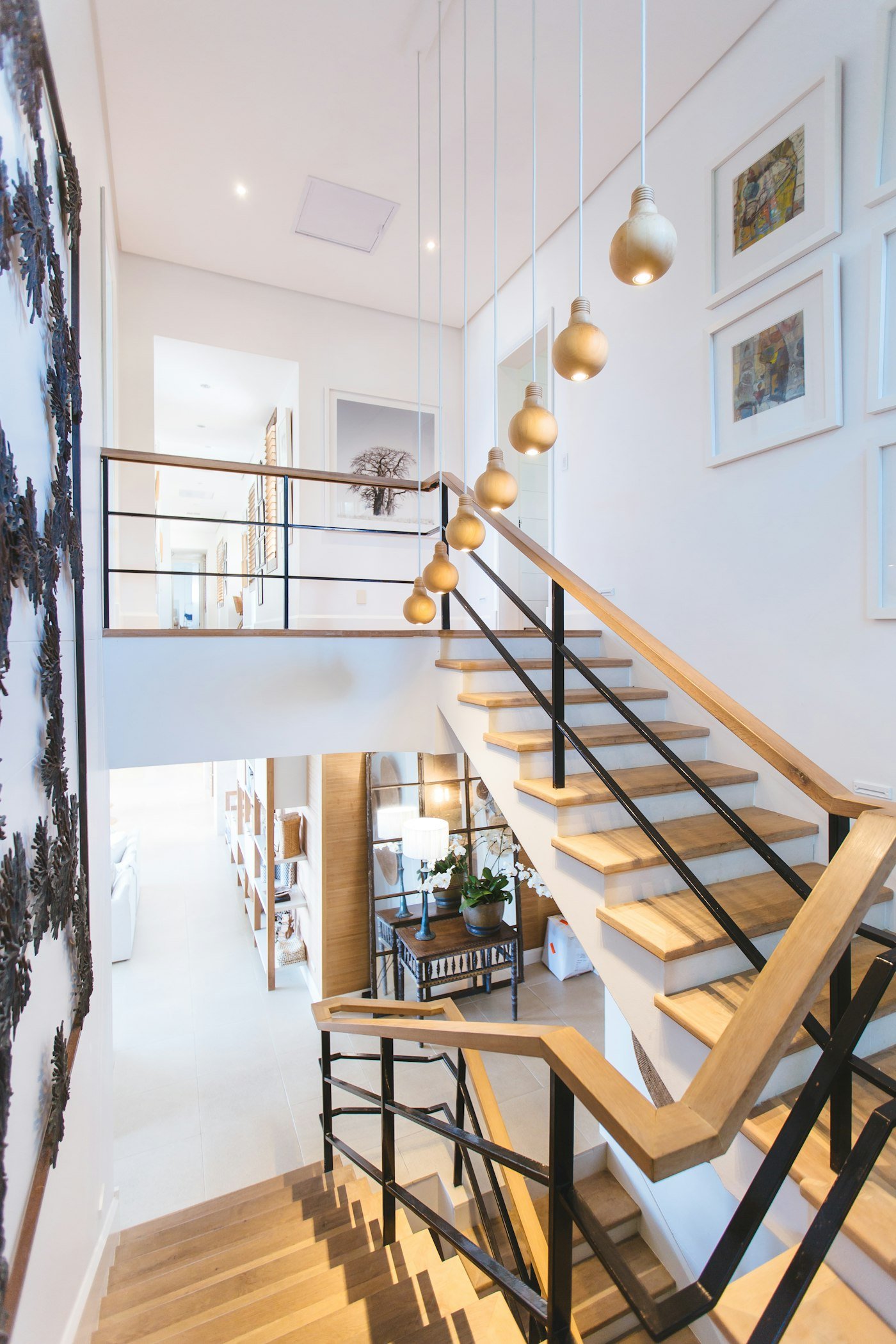
Oak stairs with a black metal rail and a row of wooden bulb lights hanging beside them
Oak stairs with a black metal rail, and a row of wooden bulb lights hanging beside them.

The stair

We walk up and down. A loose tread, a rail that moves, or a mark on the wall is written down. The stair also shows how the floors join, and whether light reaches the hall.

If someone lives in the house, we only come at a time they have agreed.
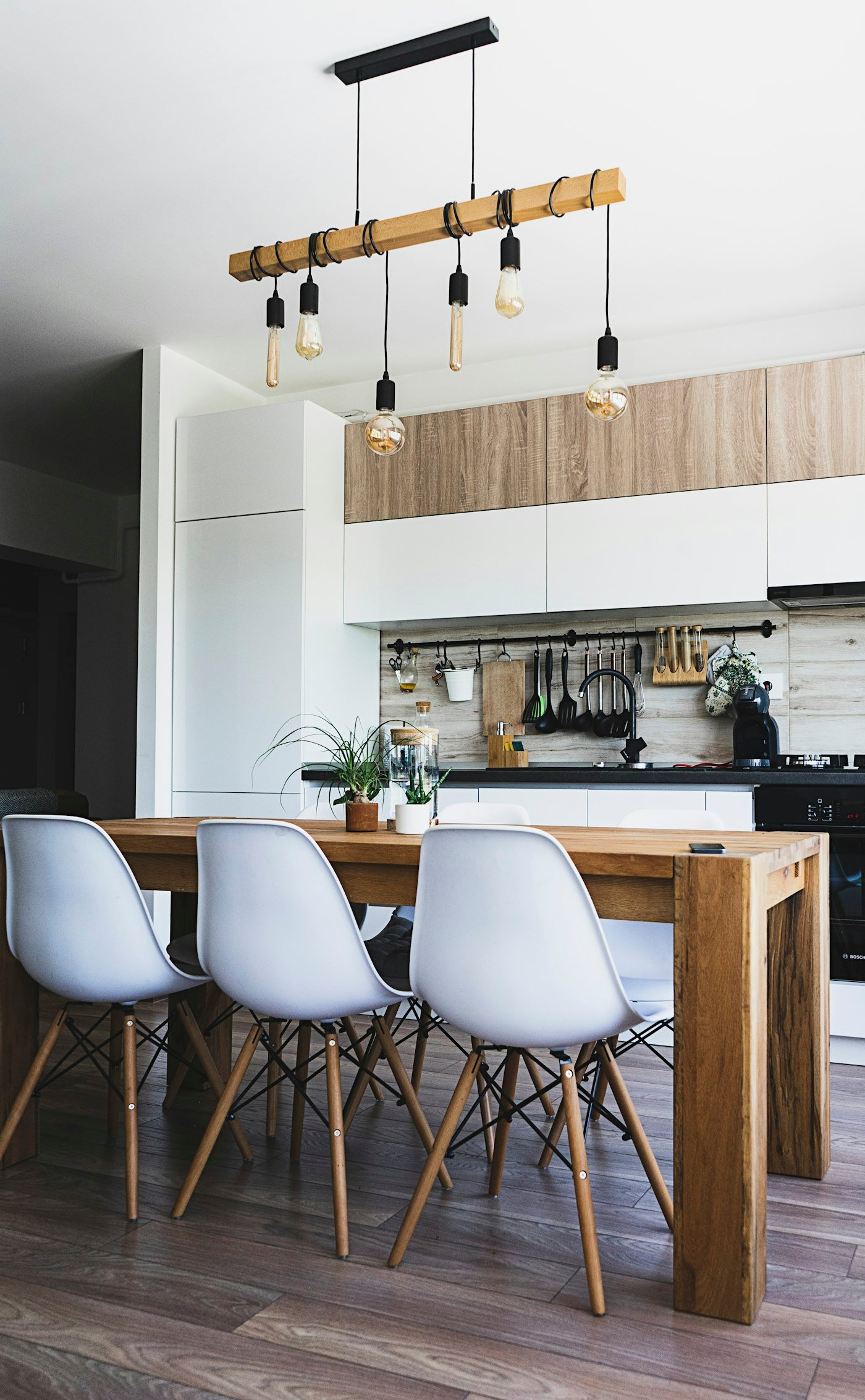
A wood dining table with white chairs, and a kitchen of white cupboards and wood panels
A wood dining table with white chairs, and a kitchen of white cupboards and wood panels behind it.

Where people eat

The table tells us the size of the room. Behind it we look at the cupboards, the worktop, and any drip under the sink. We are not judging the chairs. We are deciding whether this is a house we want to own.

Light in the hall

A dark stair is noted as clearly as a cracked tread. We switch on the lights that are there and see what the hall looks like without the daylight from the front door. A blown bulb in a shared landing is a small thing. A whole floor with no light is not.

What we do not change on the day

We do not start work during a first look. No one is booked to paint, and nothing is taken away. The visit is for seeing. Any repair waits until we own the house, or until a sale of ours is already agreed and the writing says who does the work.

After the walk

We keep a short note of what was sound and what was tired. That note is what we use if we buy, and what we share, in plain words, if we later sell.

To ask about a house we own, or one you hope we will buy, use the contact page.